Evaluating The Talent Of Cyborgs

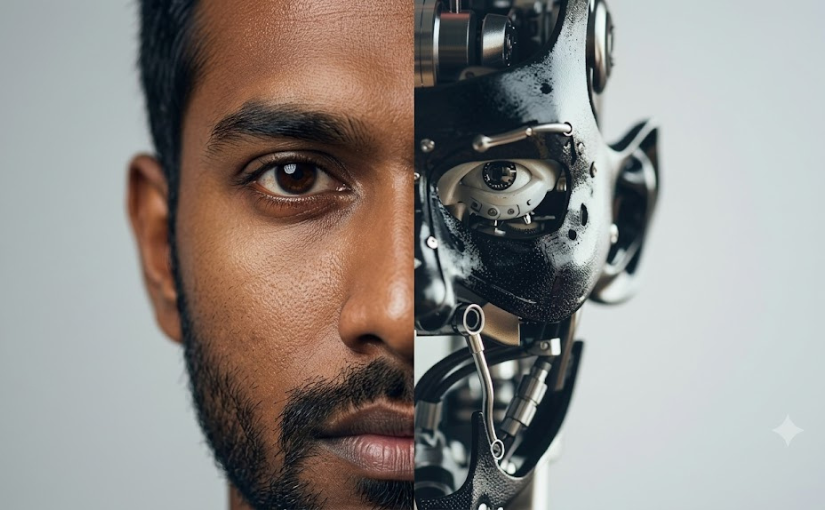
A cyborg is a being that is part biological and part mechanical or electronic. The term was originally coined to describe humans enhanced with technology.

Today, in a way, we have all become a type of cyborg.

Without technology, most of us would accomplish only a fraction of what we do today.

As technology has advanced, the amount of work a single person can accomplish has increased dramatically.

So, in a world like this, how should we evaluate the talent of candidates during recruitment?

Should we measure only their raw talent? Or should we measure what they can achieve with modern digital tools?

Raw Talent

Raw talent is a person’s processing power.

It includes their ability to understand new concepts quickly, think logically, solve problems, learn rapidly, exercise good judgment, and communicate effectively.

These are the underlying abilities that remain valuable regardless of which tools are available.

Talent with Digital Tools

Talent with digital tools is a person’s real-world productivity.

It measures how effectively they use Google, AI, documentation, IDEs, design tools, automation, and other technologies. It reflects how quickly they can produce high-quality work and how well they combine multiple tools into an efficient workflow.

Assessing Only One Side

Some interviewers try to eliminate every digital aid.

They ask candidates to write algorithms on a whiteboard, remember obscure syntax, or solve problems they would normally Google in 30 seconds.

While this reveals certain aspects of raw ability, it often ignores how people actually work.

There is the opposite mistake too.

Candidates are allowed to use AI for everything, and interviewers never discover whether the candidate truly understands the solution. The candidate may simply be copying AI-generated answers without being able to verify, adapt, or troubleshoot them.

Neither approach gives the full picture.

Performance = Raw Ability × Tool Effectiveness

The strongest employees usually have:

  • Solid fundamentals.
  • Good judgment.
  • Excellent use of modern tools.

Someone with exceptional raw talent but poor tool usage may not be very productive.

Likewise, someone who only knows how to prompt AI, but lacks fundamental understanding, will eventually hit a ceiling because they cannot verify, adjust or troubleshoot the AI’s output.

What Should You Test in an Interview?

A better approach is to split the assessment into two parts.

1 – Fundamentals (No AI)

Evaluate the candidate’s:

  • Logical reasoning.
  • Understanding of core concepts.
  • Ability to explain how something works.
  • Ability to debug a simple problem.
  • Ability to discuss trade-offs and justify decisions.

2 – Practical Task (AI Allowed)

Give candidates a realistic work assignment.

Observe:

  • How they use AI.
  • Why they accept or reject AI suggestions.
  • Whether they verify AI-generated answers.
  • The quality of the final result, not just the speed.

This reflects how they will actually perform on the job.

Weighting Must Be Changed to the Role

The balance between raw ability and tool usage should vary depending on the role.

Junior engineers should be evaluated more on raw ability and learning potential. AI skills can be learned quickly, but strong fundamentals take years to develop.

Mid-level engineers should demonstrate both solid technical foundations and effective use of modern tools.

Senior engineers, architects, and project managers should be evaluated more heavily on judgment, decision-making, communication, system thinking, and their ability to use technology to increase the productivity of themselves and their teams.

The Shift of the Evaluation

As AI becomes a standard part of professional work, hiring solely based on raw memory and intelligence is becoming less predictive of success.

At the same time, hiring solely based on AI-assisted output is risky too.

The candidates who consistently perform best are those with strong fundamentals who know how to amplify their abilities with modern tools.

6 Level Buckets: A Framework to Classify Anyone’s AI Expertise

Everybody claims to be an AI expert. Of course they are. But how do you measure it?

Level 0: AI Unaware

Has little or no understanding of modern AI tools. May have heard of ChatGPT but doesn’t use AI in their work.

Evaluation: Ask how they currently perform common work tasks such as research, writing, problem-solving, or coding. Person at this level typically do not mention AI tools or are unable to explain how AI could improve their workflow.

Level 1: AI User

Uses AI for simple tasks such as asking questions, writing emails, summarising text, or generating ideas. Mostly copies and pastes prompts.

Evidence: Occasionally uses AI assistants for simple tasks.

Evaluation: Ask to complete a simple task using an AI assistant, such as drafting an email, summarising a document, or generating ideas. Observe whether they can write an effective prompt and critically review the AI’s response instead of accepting it without question.

Level 2: AI Practitioner

Regularly integrates AI into daily work. Understands prompt engineering, evaluates AI output, chains prompts together, and knows each tool’s strengths and limitations.

Evidence: Reliably improves work quality and productivity with AI.

Evaluation: Present a realistic work scenario and ask how they would use AI to complete it. Look for structured prompting, iterative refinement, validation of AI-generated content, and an understanding of when AI should or should not be used.

Level 3: AI Builder

Designs AI-powered workflows or applications. Uses APIs, automation platforms, RAG, agents, embeddings, MCPs, or AI SDKs to solve business problems. Doesn’t necessarily build foundation models.

Evidence: Designs AI-powered workflows and automations.

Evaluation: Ask to explain or design an AI-powered solution for a business problem. They should be able to describe the overall architecture, data flow, model selection, integration points, and trade-offs rather than simply naming AI technologies.

Level 4: AI Engineer

Builds and deploys production AI systems. Fine-tunes models, evaluates performance, manages infrastructure, optimises inference, handles security, monitoring, and scalability.

Evidence: Builds and deploys AI solutions in production.

Evaluation: Discuss production experience by exploring topics such as deployment, model evaluation, latency, cost optimisation, security, monitoring, and reliability. They hould be able to explain technical decisions, lessons learned, and challenges from real-world AI systems they have built or maintained.

Level 5: AI Researcher / Innovator

Advances the field through research or significant innovation. Develops new architectures, training methods, evaluation techniques, or publishes original work.

Evidence: Conducts advanced AI engineering or research.

Evaluation: Evaluate original contributions rather than general knowledge. Discuss research publications, patents, open-source contributions, novel algorithms, benchmarking methodologies, or significant technical innovations. The focus should be on how the candidate has advanced AI beyond applying existing techniques.

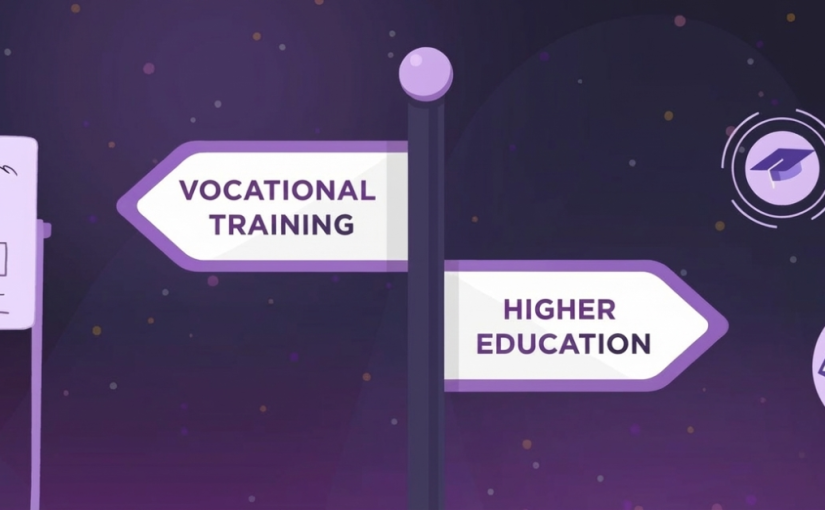
Degrees Are Not Vocational Trainings

There is a growing misunderstanding about what a university degree is meant to do. Specially in the IT industry. Many people expect degrees to work like vocational training programs. This expectation creates frustration for students, employers, and educators alike.

A degree is academic by nature. Its primary goal is to provide academic value, not to train someone for a single, specific job role. Degrees focus on building strong foundations: critical thinking, problem-solving, theory, and long-term understanding of a field.

This does not mean degrees are useless for careers.

Some degrees are designed to produce professionals for clearly defined roles. A good example is MBBS, which leads to a specific profession. However, this is not how most degrees work. Especially in fields like IT, engineering, or management.

At the same time, it is also incorrect to say that degrees only deliver theory with no relevance to jobs. Degrees aim to prepare students for a range of job roles within an industry, not one guaranteed position. They provide a broad academic base that allows graduates to adapt, learn, and grow over time.

What Are Vocational Trainings?

Vocational training programs are different by design.

They focus on training people for specific job roles. These roles usually exist in industries with stable and predictable demand. Examples include plumbers, welders, carpenters, electricians, and mechanics.

Vocational courses are practical, role-focused, and short-term. Their success depends on how stable and clearly defined the job market is.

IT Is Different

The IT industry does not work like traditional vocational industries.

1. Technology Changes

    Technology changes fast. Job roles evolve quickly. Tools, programming languages, and frameworks rise and fall within a few years. Because of this, it is very difficult and even impossible to design a long-term vocational training that guarantees relevance.

    What is in demand today may be outdated tomorrow.

    2. The Nature of the IT Industry in Sri Lanka

    Sri Lanka has a large and diverse IT services sector (majority doing outsourced services). Many companies do not build the same type of products or stick to the projects that use same technologies.

    Is it a client who wants to build new products using the latest technologies? Is it a need on maintaining and extending legacy systems built using older tools and platforms?

    Because of this mix, even companies struggle to clearly define the exact workforce they need. A “job-ready” graduate for one company may be completely unsuitable for another.

    Misunderstood by Both Companies and Students

    The confusion affects both sides of the industry.

    Many IT companies expect IT degrees to train graduates exactly for their internal job roles.
    Many students expect degrees to train them for a specific role and guarantee employment.

    Both expectations are unrealistic.

    Degrees can only prepare students with strong academic foundations that allow them to adapt to different technologies, industries, and career paths.

    A Shift in Mindset Is Needed

    If we want a healthier IT ecosystem, we need to change how we think.

    Degrees should be respected for what they are: academic programs that prepare people to think, not just to follow tools.

    Job readiness comes from opportunity, training and continuous learning, not from degrees alone.

    Understanding this difference benefits everyone including students, employers, and the industry as a whole.

    What does “learning fundamentals” actually mean in practice?

    “Learn the fundamentals so you’ll succeed in your endeavor” This is a common piece of advice people often give. You’ll frequently hear it when asking how to secure your career or how to learn a new technology, etc.

    In today’s world, overflowing with knowledge and information. This advice is vague and it leaves us with unanswered questions. What exactly should I learn as fundamentals? How can I be sure I’m learning the right things?

    So when someone says “learn the fundamentals”, the right response is:

    “Which fundamentals, and how deep, based on what I’m building?”

    Physics & Electronics (Atoms, Electrons, Gates, etc.)

    Necessary if you’re doing hardware design, building compilers, or working with embedded systems. Not necessary for typical software developers.

    Computer Architecture & Operating Systems

    This area consists of concepts CPU cycles, memory hierarchy (RAM vs cache), processes, threads, virtual memory, file systems.

    This is necessary if you’re into systems programming, performance tuning, or OS development.

    Programming Language Theory & Compilers

    This is about syntax, parsing, type systems, interpreters vs compilers.

    This is necessary if you’re building tools (like linters, and transpilers), designing new languages, or deep into back-end design.

    Data Structures & Algorithms

    Concepts and implementation of arrays, linked lists, trees, hashmaps, sorting, recursion, time/space complexity.

    This is essential for all developers. They underlie everything, from efficient code to debugging performance issues.

    Networking Basics

    This is about the theory of HTTP, TCP/IP, DNS, client-server model.

    This is necessary if you build web apps, mobile apps, APIs, etc. But you don’t need to know TCP flags or OSI model layers deeply unless you’re in DevOps or network engineering.

    Databases & Querying

    This is about the design of databases, SQL, indexing, normalization, and transactions.

    Learning databases is essential for most types of app developers. You can’t avoid data persistence.

    Version Control, Build Tools, Deployment

    This is about learning Git, CI/CD, testing, and packaging tools.

    It is required for modern software development in teams and production settings.

    Software Architecture

    Software architecture becomes fundamental once you move from building apps that “just work” to systems that are “designed to last.” Architecture is essential at certain points in a developer’s or engineer’s journey. especially when working on large-scale, long-lived, or team-based systems.

    Linear Algebra, Statistics, Programming (Python) and ML Theory

    The fundamentals required for AI vary depending on the role you’re aiming for.

    whether you’re a machine learning engineer, data scientist, AI researcher, ML ops engineer, or even a developer using AI APIs these are the core knowledge areas required for that.

    Final thoughts:

    My list is limited to few common IT and Computer related fields. There are many more.

    When learning fundamentals, you don’t need to “boil the ocean” of computer science. As a practical use, go just deep enough to understand what your tools abstract away. And just go deeper when things break, or performance matters.