Talent Retention in IT Outsourcing Companies: A Persistent Myth?

“Talent retention” is one of the most frequently used phrases in the IT industry.

Company presentations highlight about it, HR policies built around it, leadership always talk about it in townhall meetings. Yet, in reality true talent retention in many IT outsourcing companies feels more like a myth than an achievable outcome.

The Nature of IT Outsourcing

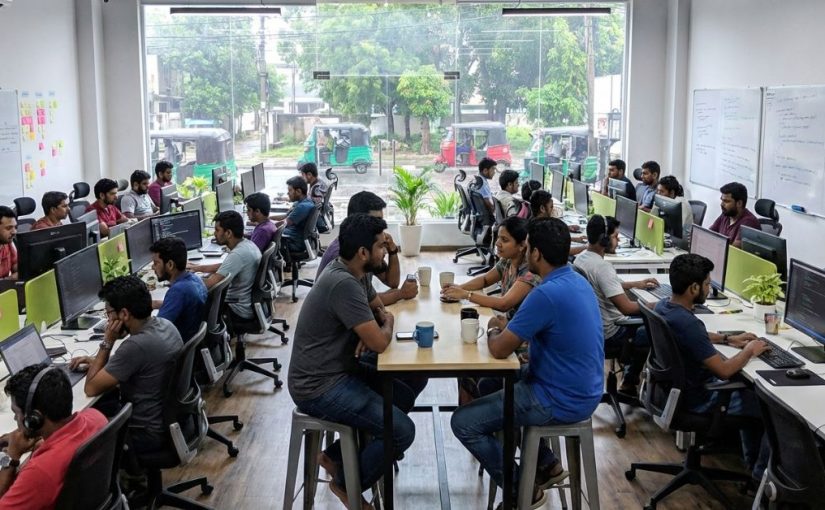
At its core, IT outsourcing is project-driven. Engineers are hired to work on client requirements, timelines, and budgets that are outside the company’s control. When projects end, change direction, or stop funding, teams are reshuffled or released.

This creates an environment where stability is promised, but uncertainty is built into the business model.

Unlike product companies, outsourcing firms rarely build something they fully own. Developers often short-term deliverables. Over time, this limits emotional ownership and long-term attachment to the work.

Skill Growth vs. Career Growth

Outsourcing companies often argue that exposure to multiple clients accelerates learning.

But is that a truth? Developers may gain surface-level exposure to many technologies but not always the enough depth to master.

Career growth is constrained by:

Flat role structures

Promotion cycles tied to headcount needs, not merit

Titles that change faster than responsibilities

The Market Works Against Retention

In countries like Sri Lanka, the IT talent market is highly competitive. Skilled professionals are approached with:

  • Better salaries
  • Remote opportunities with global companies
  • Product-based roles with clearer ownership

In such an environment, loyalty alone cannot compete with opportunity.

A Shift From Retention to Better Engagement

Keeping large numbers of engineers for the long term is seems impossible, especially in IT outsourcing. We should accept it as it is rather trying to protect what isn’t actually works.

Instead of asking, “How do we keep people for 5–10 years?” a better question might be

“How do we create a place where people do their best work while they are here?”

Shorter tenures are not necessarily failures. If an engineer leaves after a short period of time with stronger skills, positive experiences, and professional respect, that relationship has still delivered value on both sides.

Companies that focus on transparency, meaningful work, and realistic expectations may not retain everyone but will earn a stronger reputation, better referrals, and quality talent over time.

The Three Management Models That Define Your Company’s Culture

Have you ever seen the following issues in the management of people at organizations?

Chaos in autonomy-led control in a new team with no clarity

Stagnation in Process-led control in a creative team

Micromanagement and silos in leader-led control in a 200-person organizations

The challenges described above arise when organizations misapply distinct control models. These models represent different approaches to managing people, and using the wrong model at the wrong time can create significant friction. This post explores these management models, their strengths, when they work best, and when they fail.

1. Leader-led Control

Follow the person, not just the process.

The leader-led model relies on relationship-based control, where work is driven by personal loyalty, status, or hierarchy rather than processes or outcomes. Traditional hierarchical companies or early-stage startups with charismatic founders often adopt this approach.

Pros: This model fosters high trust in small teams, enabling rapid decision-making due to strong leadership. It excels when loyalty and relationships outweigh formal systems, such as during a crisis when decisive command is critical.

Cons: Scaling is the primary challenge, as decisions often bottleneck at the leader. This can encourage favoritism, suppress dissent, and harm team morale if the leader is toxic or inconsistent. The model lacks sustainability if the leader steps away or burns out.

2. Autonomy-led Control

Trust through accountability and purpose.

In the autonomy-led model, employees are given goals but have the freedom to decide how to achieve them. Control is maintained through outcomes and peer accountability. This approach is common in high-trust environments, such as R&D teams, product startups, and senior-level roles.

Pros: This model excels when employees are skilled, motivated, and aligned with organizational goals. It fosters creativity, speed, and adaptability, making it ideal for company cultures that prioritize trust, transparency, and shared objectives.

Cons: The model fails when teams are inexperienced or lack clear direction. Without well-defined metrics or boundaries, it can descend into chaos.

3. Process-led Control

The system is the boss.

Employees adhere to clearly defined workflows, rules, standard operating procedures (SOPs), and timelines. Tasks are predictable and often repetitive. This approach is widely used in industries such as manufacturing, business process outsourcing (BPO), logistics, and compliance-heavy environments like banking and healthcare.

Pros: This model excels when employees are less experienced or when organizations operate at a large scale. It ensures scalability and consistency, making it ideal for franchises, manufacturing, or environments where compliance and risk reduction are critical.

Cons: The model struggles in ambiguous or creative environments where innovation is needed. Employees may feel like cogs in a machine, leading to low morale due to limited ownership or rigid roles. It also fails to adapt to rapid changes or market shifts.

Choosing the right model

In reality, most organizations blend these three, but the dominant one shapes their culture and performance. The optimal mix depends on the nature of the work (routine versus creative), team maturity, and the company’s stage of growth.

Example 1:
Startups often begin with a leader-led approach, transition to autonomy-led as they scale, and formalize operations with a process-led model when executed effectively.

Example 2:
A big IT company might start with a process-heavy setup to keep everything running smoothly. Later, they give more freedom to small product teams to move faster and be creative. And when something important or urgent comes up, leaders step in to make quick calls and keep everyone on track.

Can we mix these models?

Yes, and in most cases, we should. The best organizations use a mix of all three, depending on what the situation calls for.

  • Process-led works well in areas that need structure and consistency like customer support or operations.
  • Autonomy-led is great for creative or fast-moving teams, like product or design.
  • Leader-led comes in handy during big decisions, early startup phases, or when things get urgent and need strong direction.

It’s about knowing when to shift gears. The smartest teams flex between them to get the best results. Choosing the right model boosts engagement and productivity. Great teams don’t just happen. They’re built on the right kind of control.