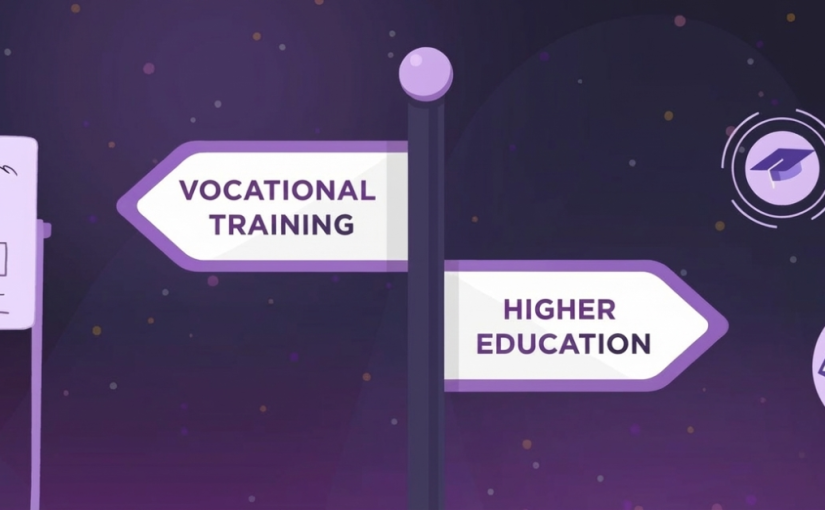
There is a growing misunderstanding about what a university degree is meant to do. Specially in the IT industry. Many people expect degrees to work like vocational training programs. This expectation creates frustration for students, employers, and educators alike.
A degree is academic by nature. Its primary goal is to provide academic value, not to train someone for a single, specific job role. Degrees focus on building strong foundations: critical thinking, problem-solving, theory, and long-term understanding of a field.
This does not mean degrees are useless for careers.
Some degrees are designed to produce professionals for clearly defined roles. A good example is MBBS, which leads to a specific profession. However, this is not how most degrees work. Especially in fields like IT, engineering, or management.
At the same time, it is also incorrect to say that degrees only deliver theory with no relevance to jobs. Degrees aim to prepare students for a range of job roles within an industry, not one guaranteed position. They provide a broad academic base that allows graduates to adapt, learn, and grow over time.
What Are Vocational Trainings?
Vocational training programs are different by design.
They focus on training people for specific job roles. These roles usually exist in industries with stable and predictable demand. Examples include plumbers, welders, carpenters, electricians, and mechanics.
Vocational courses are practical, role-focused, and short-term. Their success depends on how stable and clearly defined the job market is.
IT Is Different
The IT industry does not work like traditional vocational industries.
1. Technology Changes
Technology changes fast. Job roles evolve quickly. Tools, programming languages, and frameworks rise and fall within a few years. Because of this, it is very difficult and even impossible to design a long-term vocational training that guarantees relevance.
What is in demand today may be outdated tomorrow.
2. The Nature of the IT Industry in Sri Lanka
Sri Lanka has a large and diverse IT services sector (majority doing outsourced services). Many companies do not build the same type of products or stick to the projects that use same technologies.
Is it a client who wants to build new products using the latest technologies? Is it a need on maintaining and extending legacy systems built using older tools and platforms?
Because of this mix, even companies struggle to clearly define the exact workforce they need. A “job-ready” graduate for one company may be completely unsuitable for another.
Misunderstood by Both Companies and Students
The confusion affects both sides of the industry.
Many IT companies expect IT degrees to train graduates exactly for their internal job roles.
Many students expect degrees to train them for a specific role and guarantee employment.
Both expectations are unrealistic.
Degrees can only prepare students with strong academic foundations that allow them to adapt to different technologies, industries, and career paths.
A Shift in Mindset Is Needed
If we want a healthier IT ecosystem, we need to change how we think.
Degrees should be respected for what they are: academic programs that prepare people to think, not just to follow tools.
Job readiness comes from opportunity, training and continuous learning, not from degrees alone.
Understanding this difference benefits everyone including students, employers, and the industry as a whole.

A multifaceted professional known for diverse interests and contributions in various fields, including management, technology, education and entrepreneurship. Also the founder of ITPro.lk, bringing a unique perspective and industry knowledge to writing.